
The “Emergency” Newborn Manual: A Survival Guide for Unexpected Parents
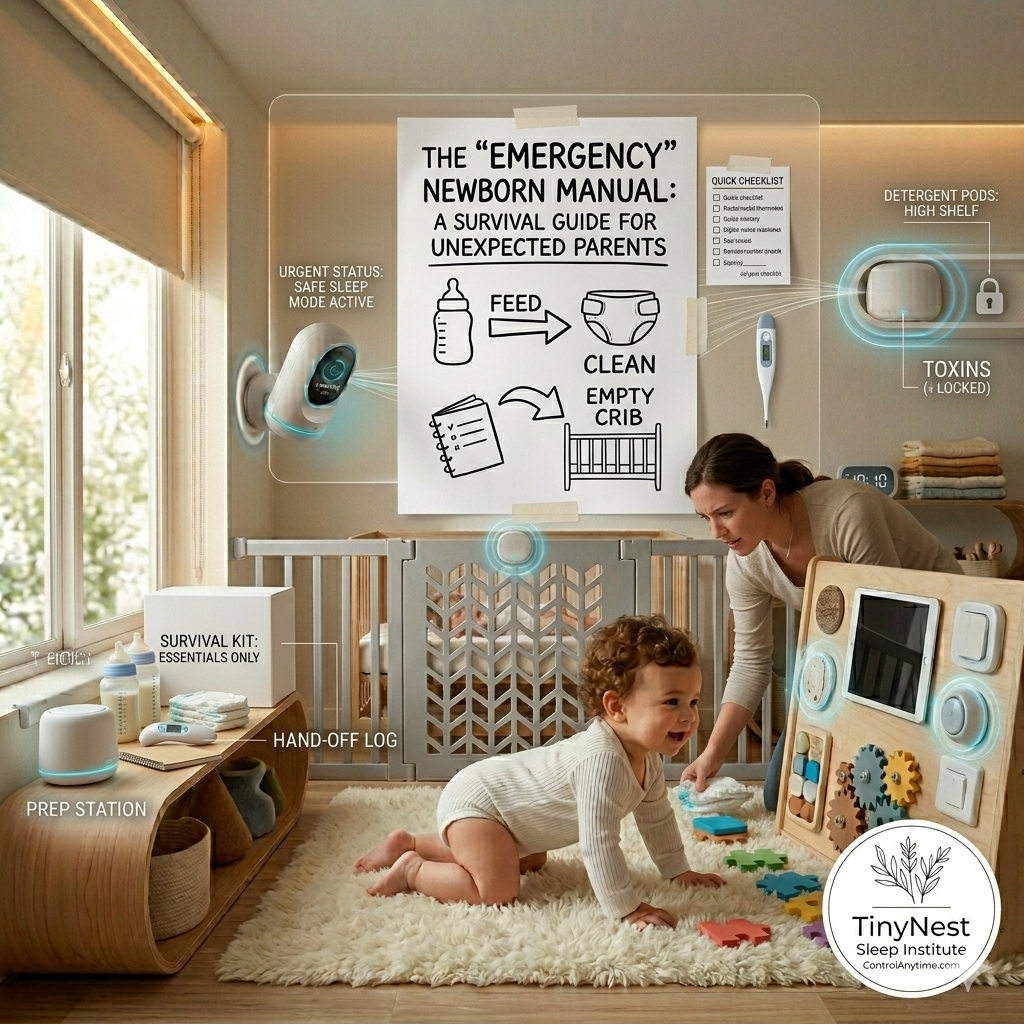
From safe sleep to toxic household items, here is what you need to know when a baby arrives overnight.
1. The “Safe Sleep” Commandment
The most important rule for an infant is how they sleep. Exhaustion is real, but “co-sleeping” on a couch or bed is the leading cause of accidental injury.
The Rule: Back to sleep, on a firm, flat surface, in a crib or bassinet with nothing else—no pillows, no blankets, no toys.
“Newborn care isn’t about being perfect; it’s about being the ultimate protector of their environment.”
2. Identifying “Hidden” Household Toxins
You know to hide the knives, but 2026 homes have hidden dangers. Ensure these are out of reach immediately:
- Laundry & Dish Pods: These are highly concentrated and look like candy.
- Vaping Supplies: Liquid nicotine is a severe neurotoxin for infants.
- Button Batteries: Found in car keys and remotes; they are life-threatening if swallowed.
3. The “Tag-Team” Shift Strategy
If you are co-parenting or living with roommates, sleep deprivation is your biggest enemy. We recommend a “Shift Log.” Track every bottle and diaper change on a whiteboard. This ensures that when the “night shift” person takes over, they have all the data they need without waking up the other person.
4. Monitoring & Tech
In 2026, we have the advantage of smart sensors. If you are overwhelmed, a simple AI monitor can track breathing patterns and nursery temperature (ideally 18°C–21°C), giving you peace of mind while you catch up on sleep. Review our
2026 Safety Checklist for more tech tips.
Conclusion: You’ve Got This
Infants are resilient, but they rely entirely on your ability to control their surroundings. Focus on the basics: keep them fed, keep them clean, and keep their sleep space empty. You are doing the “work” of an infant protector.