
The AI Nursery of 2026: A Blueprint for Algorithmic Safety, Ethical Data, and Predictive Care
Beyond remote viewing: How integrated, predictive AI is moving nursery tech from passive reactive alerts to proactive, intuitive parenting support.
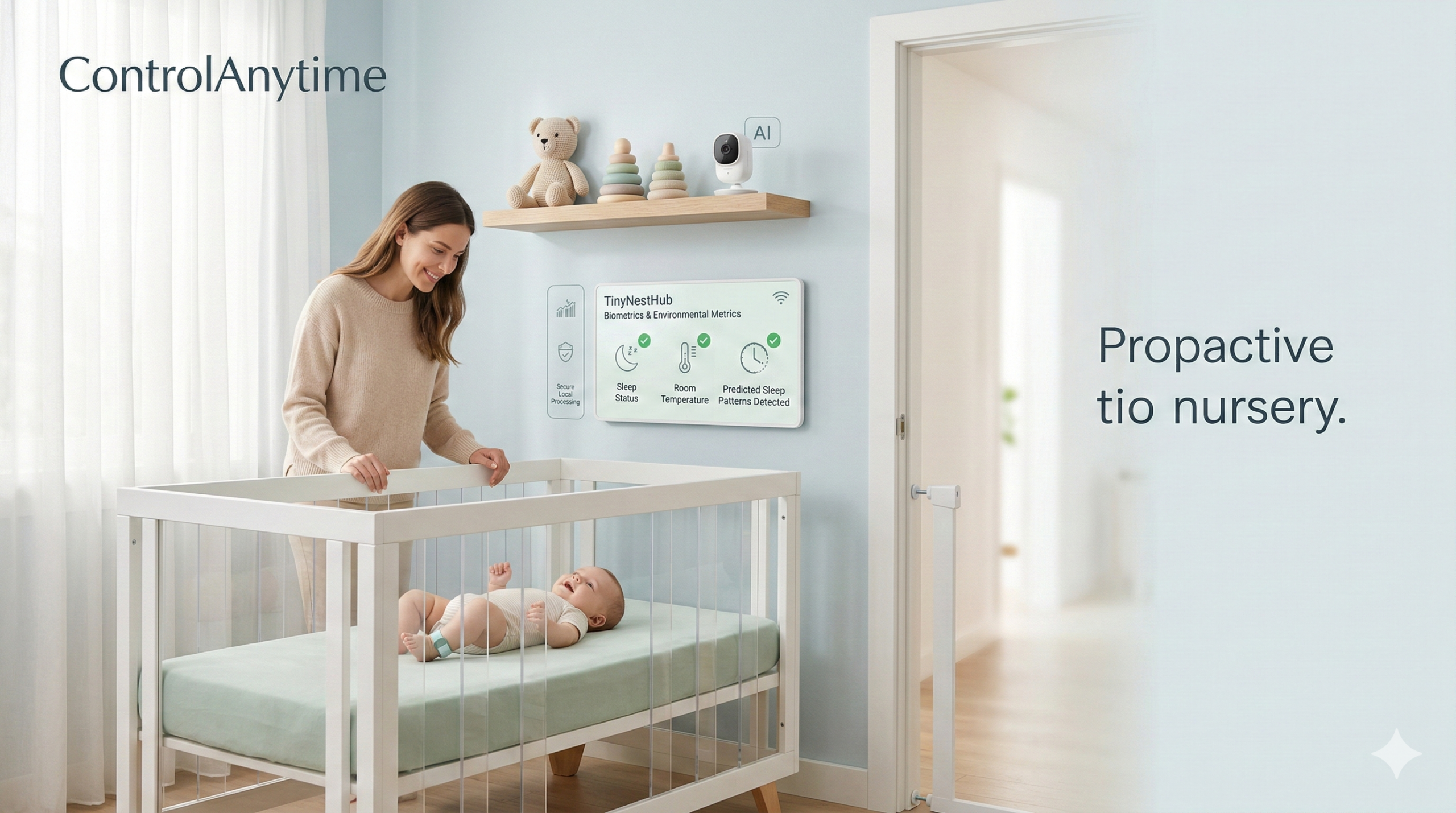
Welcome back to ControlAnytime, your trusted source for practical parenting wisdom and technology analysis. For parents navigating the landscapes of 2026, the connected nursery is no longer a collection of novelty gadgets; it is a critical, integrated safety ecosystem. When the first smart monitors arrived, their primary function was simple remote viewing—a ‘window’ into the crib. By 2024, rudimentary analytics for sleep tracking and breathing detection became standard.
However, the **Strategic Blueprint 2026** moves decisively beyond automated responses and reactive alerts. The new frontier is predictive care, driven by sophisticated artificial intelligence (AI) and edge computing. Automation, by definition, is passive; it requires an event (a cry, a movement) before it triggers a programmed response. Prediction is active and proactive. The 2026 Blueprint defines the successful AI nursery as a technological toolkit designed to filter out the noise so your innate parenting signals become powerful, precise, and proactive. This deep integration allows technology to serve as a reliable, secure extension of your protective instincts.
“The promise of the 2026 AI nursery isn’t automation—which is passive; the promise is prediction. It is a technological ecosystem that filters out environmental noise so a parent’s innate protective signals become powerful, precise, and proactive.”
1. From Remote Viewing to Predictive Interpretation
In the early 2020s, smart monitors struggled with contextual analysis. A camera could detect movement, but it couldn’t reliably distinguish between a baby waking up gently, adjusting their position, or entering distress. Parents were often bombarded with false alerts, leading to alarm fatigue rather than security. The **2026 AI Nursery** utilizes advanced computer vision (CV) and acoustic analytics, processing data locally (“on the edge”) to provide high-fidelity interpretation in real-time. This isn’t just seeing; it is understanding.
The system analyzes a subtle shift in respiratory rhythm, environmental audio cues (the quality of a cough vs. a cry), and biometric movement patterns. Rather than triggering an alarm the second an anomaly is detected, the AI synthesizes this data against historical patterns. If the environmental noise or movement signature precedes a genuine wake-up event 90% of the time for *your specific child*, the system generates a preemptive, low-priority ‘heads-up’ rather than a jarring high-priority alert. This predictive capability allows parents to intervene calmly, maintaining a safe environment and preventing unnecessary disruptions.
2. Biometric Synchronization and Proactive Intervention
A key component of the 2026 ecosystem is biometric synchronization. The blueprint emphasizes the importance of moving away from fragmented, single-device metrics (e.g., a standalone smart sock reporting isolated oxygen data) toward an integrated system. In an optimized nursery, non-invasive biometric sensors (radar-based or localized wearables) must synchronize directly with the primary nursery hub and environmental controls. The system continuously monitors core metrics such as skin temperature, heart rate variability, and movement consistency. The value, however, lies in proactive intervention.
If the biometric data indicates the infant is entering a light sleep phase, the integrated system can proactively adjust environmental factors. For example, if the hub detects a simultaneous spike in localized room temperature and heart rate variability (indicating discomfort), the AI can automatically signal the connected thermostat to reduce the temperature or adjust the lighting. Securing your home means securing these environmental variables automatically, using data to maintain a foundation of informed security, keeping the connected sanctuary perfectly balanced.
3. Ethical AI and Data Sovereignty: The Trust Requirement
The greatest barrier to widespread adoption of AI in parenting tech is not capability; it is trust. When biometric, environmental, and audio data of an infant is continuous and detailed, data privacy and ethical data practices are non-negotiable. The **ControlAnytime Safety Lab** strongly advocates for strict adherence to localized data sovereignty. The 2026 Blueprint defines data sovereignty as the principle that all primary, identifiable biometric and audio-visual data must be processed and stored locally on a secured, encrypted hub (edge computing). This data should only leave the home when explicitly authorized for remote viewing, and even then, only via secure, end-to-end encryption.
Trust is built when manufacturers demonstrate a commitment to ethical AI. Algorithms must be tested for accuracy across diverse populations (different skin tones, movement patterns, and crib environments) to ensure safety alerts are reliable for every child. Proactive, reliable technology must also be secure technology, protecting the connected nursery ecosystem from exploitation. Our mission is to ensure technology serves the family without compromising its privacy or dignity, creating a truly reliable extension of parental care.
Conclusion: Designing an Intuitive, Rather than Automated, Sanctuary
As technology moves deeper into the nursery, the risk of data overload increases. Parents do not need more numbers; they need more clarity. A safe environment is peace of mind, and that peace of mind is undermined by an ecosystem that imposes rigid, external protocols. The goal of the 2026 Parent’s Blueprint is not to replace your intuition; it is designed to filter out the noise so your innate signals can flourish.
The most sophisticated AI still cannot replicate a parent’s instinctive protective role. The AI nursery, therefore, should prioritize deep personalization. Whether it is learning your infant’s specific hunger cues vs. discomfort cues, or automatically adapting the ‘wake-up’ lighting based on your household’s unique rhythms, the technology must reflect and reinforce your personal parenting style. A successful, connected sanctuary is one where the technology feels like a natural extension of your care—providing powerful, precise, and proactive wisdom without disrupting the essential bond between parent and child.