
Beyond First Words: 5 Science-Backed Ways to Boost Infant Language Processing
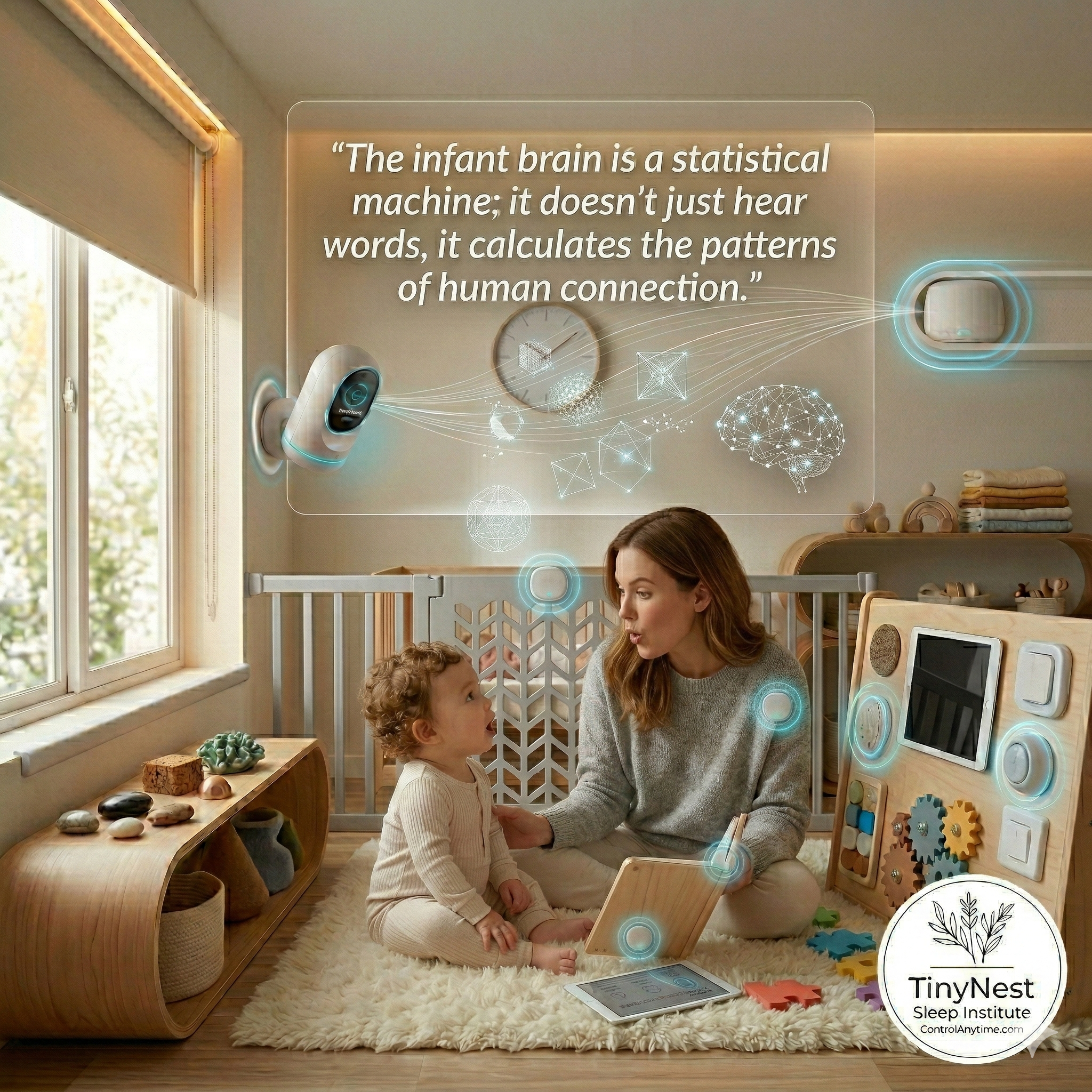
How “Parentese,” narrating your day, and responsive signaling build the foundation for lifelong communication.
1. The Magic of “Parentese” (Not Baby Talk)
Research in 2026 continues to confirm that Parentese—the high-pitched, elongated, and exaggerated way we speak to babies—is a biological tool. Unlike “baby talk” (which uses made-up words), Parentese uses real words but makes the vowels clearer. This helps the infant brain distinguish between different sounds (phonemes) more effectively.
“The infant brain is a statistical machine; it doesn’t just hear words, it calculates the patterns of human connection.”
2. Narrating the “Sensory Stream”
One of the easiest ways to boost vocabulary is to narrate your daily life. When you are engaging in
sensory play, describe what the baby is feeling. “You are touching the rough cork,” or “Look at the shiny brass.” This connects a physical sensation directly to a linguistic label.
3. The “Serve and Return” Method
Language is a social contract. When your baby babbles (the “serve”), you must respond with eye contact or words (the “return”). This back-and-forth interaction builds the neural pathways for conversation long before they can speak actual sentences.
4. Early Literacy: It’s Not About the Story
In the first 12 months, reading a book is less about the plot and more about the “Joint Attention.” Pointing to a picture of a dog while saying the word “dog” helps the baby understand that symbols represent reality. This is a core pillar of our
Modern Parent’s Blueprint.
5. Eliminating “Background Noise” Interference
For a baby to map sounds, they need a clear “signal-to-noise” ratio. In 2026, we advocate for “Quiet Hours” where TVs and loud appliances are off. This allows the baby to focus entirely on the frequency of human speech, which is essential for neural optimization.
Conclusion: Every Interaction Counts
You don’t need flashcards or expensive “educational” videos. The best tool for language growth is you. By talking, singing, and responding to your baby, you are providing the raw data their brain needs to thrive.